Some Tips BEFORE the Disaster Hits

Hello homeowners, we are homeowners insurance with offices located in Mesa, Gilbert, Tucson and Phoenix. We want to pass along some advice for you regarding your homes and homeowners insurance that you should be looking at today! Start with your TTD – THINGS TO DO list.

With all the devastation in our surrounding states from forest fires, we’d like to bring you some advice.

Before the fire or disaster strikes, do this, like, right NOW:

A)    Plan ahead. If family members are away from home, arrange ahead of time a DCP – designated convenient place to meet away from your home or the possible disaster in your area. Pick a gas station, convenience store, grocery store, maybe a mall, or a school, somewhere YOU all know EXACTLY where to go to meet up, this is your DCP and #2 on your TTD list. Keep in mind, family members must be prepared for this as well, regardless of where you are, you may not be able to get back to your home, you may have to depend on a son or daughter who is at home to do this, so run down the list of TTD with them beforehand, walk thru it once or twice a year. Update it as you need to.

B)    Plan ahead. Tell ALL family members where you will be planning to go, pick a motel or hotel 20 miles away, write down their phone number on your TTD list, plan on calling them for a reservation when the evacuation order comes. MAKE it number 3 on your TTD. Next, pick an alternate motel or hotel that is 30 miles away, write down that phone number on your TTD list, if you cannot get a reservation at No. 3, this is your number 4 – TTD, your contingency plan, communicate this with ALL family members! Put this TTD LIST of Things To Do and let your entire family know where it is, or better yet, give a copy to your neighbors and your closest family members.

C)    Have you got a pet (or pets)? Make sure you have a weeks supply of food for each pet set aside. Put this food and where it’s stored on your list of TTD as #5.

D)    As you make your TTD List, keep in mind how much space your vehicle has, will it (whatever IT is that you are wanting to take with you) fit with everything else on the list?  Keep this in mind when you organize your TTD. Be prepared to leave sentimental objects behind, you will NOT have time to dwell on it later.

E)    INVENTORY – Take a pad of paper and walk through your home and write down everything you have, include taking picture,s which are also helpful.  Download your pictures to a flash drive for convenience, but either have a flash drive OR get actual pictures and assemble them all together (pictures should include all room furniture, unique items, grandfather clocks, fine art, jewelry, electronics, heirloom items, irreplaceable items, and collectibles). Put this inventory paper in a safe place, ready to go. Include this INVENTORY on your TTD list.

F)    BUNDLE – collect the most important papers and keep them in a safe and secure location that you can easily open, grab the bundle, and go. This should include: your family’s birth certificates, social security cards, passports, insurance papers, car titles, and all photos taken of your home possessions and valuables, either the actual prints OR the flash drive that has the pictures. Include this BUNDLE of paperwork on your TTD list.

G)    Make a list of irreplaceable family pictures that you do not want to lose, this should be a picture checklist, and when you are told to evacuate, grab this checklist and gather up ONLY what you have written down beforehand, you will NOT have time to get sidetracked once the evacuation order comes! Include this on your TTD list.

When ordered to evacuate, keep your time in mind, hurry, but be organized (be aware, it’s possible you may NOT have 30 minutes, maybe 10 or  or even less!):

A)    TTD #1 – Get your family and pets in the car.

B)    TTD #2 – Contact immediate family members and tell them to muster at the pre-designated meeting place, you are evacuating.  KISS – keep it short and simple. This is your No.2 TTD item. Do NOT plan on having family or friends come to your home once the evacuation order is placed, all roads lead OUT and to safety.

C)    Proceed with your TTD list of THINGS TO DO.

D)   Focus on driving safely. Get to your motel/hotel safely.

E)    RECEIPTS – Typically your homeowners insurance policy will cover reasonable expenses for room and meals. Save your receipts if you are told to evacuate your home by emergency personnel. Most policies cover this but have daily limits.

F)    Once you have reached your safe hotel/motel, THEN contact family & friends and inform them of same.

If you need help accessing your homeowners policy for disasters and the like, we’re here. Contact your insurance agent before you actually need us. Our advice is free. Bring your inventory list with you.
Crazy Auto Insurance Claims

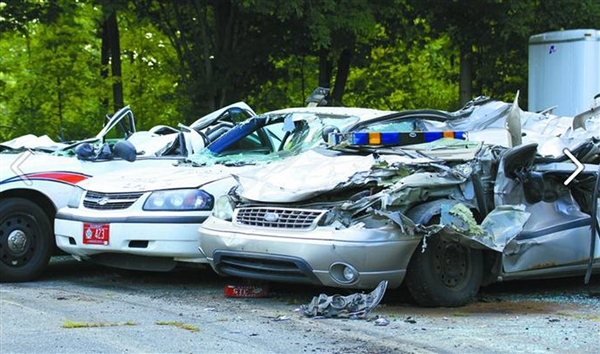
Cars ran over by a tractor.

A man driving a farm tractor ran over eight vehicles in the parking lot of a Vermont police station in an apparent revenge scheme, according to local police. Roger Pion, 34, of Newport, Vt., flattened seven marked police cruisers and one unmarked personal vehicle at the Orleans County Sheriff’s Department in Derby, Vt., around 12:40 p.m. Thursday.

“We came out and sure enough there was someone who had run over our cruisers with a tractor,” Chief Dep. Philip Brooks of the Orleans County Sheriff’s Dept. told WCAX.

Protecting Against Roof Repair Scams

It is that time of year again… Monsoon Season!

photo from boomerinthepew.com

During Monsoon Season, homeowners experience the beauty and splendor of the Arizona terrain. Flowers are in bloom thanks to more rainfall, hail and the beauty of our sunsets is magnified. It is the time of year when the animals come out in force- more than any other time of the year. Everything is radiant, until one morning when you look up and see what you have been dreading since the rains first started. Nightmares of that last hail storm begin flooding your dreams: roof damage. This damage is of course, not always delivered in the form of hail. Tree branches and high winds can add damage to already aging roofs and deteriorate living conditions and affect the costs of utilities over time if repair is stalled for too long.

An even bigger hazard to your health, your roof, your wallet AND you standing with your insurance are roof repair scams. Everyone has heard the horror stories of scam artists who took their victim’s insurance money and disappeared into thin air, leaving behind unfinished work or not showing up to do work at all. We have found through the years of taking calls from clients that not all roofing contractors are the same.

Here are a few tips to help protect you from roof repair scams:

Take the time to shop around: There is no shame in getting multiple quotes from different roofing companies. Go for it! In addition, your insurance agent may even be able to provide a list of roofing companies or refer you to roofing contractors that are located in your area. But you will never know if you don’t ask.

Don’t find yourself in high pressure situations: If a salesman is trying to pressure you or if something just doesn’t feel right about it- listen to your gut instincts. A good roofing contractor will work with you in order to get your business, not pressure you into a contract.

Research all roofing companies that you are considering: Before you begin deciding which roofing company you want to use, make sure that they are a legitimate business with a license to do home repair work in Arizona. The presence of a contractor’s license is very important as it can help to identify whether or not the company is a legitimate business. You can look up license numbers and get more information at the Arizona Contractor License Center.

In addition to the above website, you can also refer to websites such as the Better Business Bureau (www.bbb.org) or websites such as Angie’s List (www.angieslist.com), which can aid you through reviews written by previous customers (however, you should always take these reviews with a grain of salt).

-Don’t be afraid to ask questions: This is your roof. It is something that will be hanging over your head (literally), for quite some time. Asking questions is not a bad thing. Often times, a good company will encourage asking questions.

NEVER pay prior to repairs: One staple of being scammed is that the salesman will want the money before the work is started. So don’t give the full amount until the work is complete. Some roofing companies do require money before hand, but a legitimate contractor or roofing company shouldn’t ask for the full amount prior to completing the project.

Storm Damage:

If you do have storm damage and you have extensive water damage in your home, you should call a water damage repair contractor. Many times you will have a tree that has fallen and you need a tree removal company.

For more tips and articles regarding insurance, please visit: Arizona Capital Insurance.

Insurance Agents Always Have Your Back

We all like to think of life as void of mishaps. No one ever breaks a leg rock climbing to impress a girl, careens their Yukon off the desert highway because a bee flies into the vehicle, or drives their golf cart into the pool because… well, you use your imagination. At least this is our dream that gets us through the darkest hours of the night.

Arizona Insurance agents protect for car accidents.When dawn and reason return, we can all admit that some sort of “accident” is likely to befall us at some point in our lifetimes. When these hiccups appear on your radar, make sure you have one of the finest in your back pocket. No, I am not referencing an officer of the law here, although you might meet one depending on your type of misfortune. I am referring to one of the many dependable insurance agents awaiting your call.

Arizona is one of the most gorgeous places to call home, but it also offers a series of contrasts that can make life tricky. Where else can you have a 104 degree day followed by a 60 degree night, or some of the nation’s plushest golf courses abutting the most unforgiving desert? As a citizen of Arizona, you need to be aware of these distinctions and plan ahead for them. I am talking prevention here, the enemy of pitfall.

So, what exactly do you need to do to safeguard life, limb, and property in our unforgiving climate? You can divide these needs into two categories- people you love and stuff you love. First, think about the most important things in your life- the people. No one wants to talk about life insurance because death is icky. I get creeped out too, but buying life insurance just in case is not going to kill you. Plus, this is about your family, not you. You’ll be dead, so what will you care? Your loved ones are still going to have all the desires and necessities they do now, so take care of it. Life Happens is a nonprofit organization that provides a very non-threatening introduction to life insurance, such as why you need it and how much you need. Peruse this site and then contact your agent.

When you have conquered your own mortality and lived to tell of it, then you need to turn your attention to protecting the stuff. The major players here are of course your house and automobiles. Again, Arizona is unique in that we boast a large number of residents who may not reside here all year. If you are one of these individuals, be sure to appropriately prepare the home for your absence. Everything from taking your most valuable items to a bank’s safety deposit box, to turning off the water main, to hiring a landscaping crew to care for your yard, must be done before you leave. Even if you are not leaving during the summer or flying north, you must give the article “How to ‘Summarize’ your Arizona Home Before Flying North” a look. It has some very helpful hints, whether you are novice or veteran at the migration.

The rest of you need to make sure that your house and its contents are adequately covered. Spend time taking stock of what you have and communicate that earnestly to your agent. Agents are experts, so allow them to help you set the guidelines. Don’t forget to mention things like the number of bedrooms, building materials used, or whether you have a pool. Be thorough so your agent can provide you with the full coverage you need. The same goes for your cars. Auto policies can seem complicated on the surface, but the insurance agent can translate for you. In case you zoned out, the key to finding the appropriate home and auto insurance here is open communication with your agent.

So you won’t break a leg, drive your car off the road, or sink a golf cart. But if you do, you’d better have a dang good insurance agent.

Insurance Helps You Pick Up the Pieces

The defining mark of a catastrophe is that it is unexpected. If we knew something dreadful was about to occur, we would probably take the time to get things in order, collect our most precious belongings, and do anything in our power to try and prevent the catastrophe from ever happening.

Unfortunately, that’s just not how the world works and catastrophes occur before we know it. Then we’re left to pick things up the best that we can.

In Arizona, a catastrophe to your home might occur when the wind changes direction and a wildfire moves in the direction of where you live.  Or, maybe you forget to turn off your main water valve before you leave town and a burst pipe floods your home. A catastrophe could happen when a strong storm knocks an electrical wire down on your roof.

So, how do you begin to pick up the pieces if something catastrophic does happen to your home. Where do you even start?

According to an article in the Arizona Daily Star“Most homeowners have an ally they may not think of in a major home repair crisis.” That ally is none other than your insurance agent.

In the article, Tim Jankovsky, a Tuscon Insurance agent, states that Homeowners insurance carriers in Arizona frequently maintain a list of approved vendors.”  These vendors might include specific trade experts, like roofers or plumbers, restoration experts, or emergency cleanup crews.

So, if a catastrophe occurs, call your insurance agent as soon as possible to get a list of their approved vendors. “Using that service… may not only speed up getting help to your house, but could save you money on work the insurance company doesn’t cover.”

Your insurance agents might not be able to help you predict or prevent a catastrophe from happening, but they will be there to help you pick up the pieces.

Pool Saftey

Arizona InsuranceFlying into Phoenix, Arizona, you see that hundreds of homes underneath you have swimming pools.  Vast gardens of deep blue line backyards for miles and miles. Arizona is hot! Phoenix actually has five months of summer. The months of May, June, July, August, and September are considered summer season!

There’s something else floating around these backyard pools. It’s called liability! Oh, cool off in the pool, next to the pool, in the house just looking at the pool, but mostly, make sure the pool is INSURED.  Insurance should be the first place you look for information. The consequences if you don’t aren’t cool at all!

You will be hotter under the collar than triple digit heat if someone gets injured or (gasp!) killed in your pool. Just think about it, you could lose your home paying for the privilege of chillin’ in your own backyard oasis, if you aren’t insured and someone gets hurt.

There can be no relaxing next to an uninsured swimming pool. Find out from an insurance company what can happen without the proper coverage. Take a look at some of these helpful hints to help you protect your assets:

The website, www.safetyathome.com offers these great safety tips: 

  • If you have a pool at home, install a fence. The fence should be at least four feet high and have a self-closing, self-latching gate that has a locking mechanism beyond a child’s reach.
  • Cut overhanging tree limbs and remove chairs or ladders from the pool area to prevent children from climbing over the fence that surrounds the pool.
  • Keep grates and drain covers in good shape and secured in place.  Alert your family and guests to stay away from these devices, as the suction from drain outlets can be strong enough to cause entrapment of hair or body parts, which can potentially cause a person to drown.
  • Make sure you know infant and child CPR if you own a pool.

Adults are just as likely to make mistakes and drown accidentally in your pool. Just think about a certain guy you know, who, if he was alone with your pool for a weekend, would possibly be found  floating at the bottom with a beer still clutched in his hand?

Don’t know anybody like that?  What about you? Even if you’re not Jay Gatsby, how responsible are YOU when the football buddies come over? How about your wife and her book club friends. Ever notice how many bottles of wine are alongside the trash after one of THOSE meetings?

How about the teenagers? Need I go further on this point? I would add to that list above, make sure your roof is inaccessible to teenagers who think they can “make it into the pool no problem!”

Follow these instructions and your life will be easier! Don’t forget that people are stupid sometimes! Your neighbor’s rude cousin  could decide to cool off in your pool because you aren’t home. After that he forgets to lock the gate. Any kid could walk in there and I wonder who will be liable!

Arizona is a great place to live. It’s a much more tolerable place when you have AC, a swimming pool, and a cocktail in hand, so make sure you have all the insurance you need behind your back, and you will really relax!

We invite you to call one of our insurance agents to see how you can get properly covered on all your insurance policies.

What’s Covered in Your Home Insurance Policy

Here are answers to some frequently asked questions I get as an insurance agent that will be helpful to any homeowner in Arizona. In addition to questions and answers, I have included coverage items to look for before purchasing your next homeowners insurance policy or upon your next policy renewal.

What is covered in my home insurance policy?

This may sound like a basic question but it is a very important one. The good news is the standard homeowner insurance policy covers most hazards or “perils” to the dwelling. It is probably easier to answer what is not covered vs. what is. Although this list is not complete, below are a few of the major ones.

–       Flood

–       Earth movement (Earthquake, landslide, sinkhole)

–       War

–       Nuclear hazard

–       Intentional loss

–       Wear and tear

–       Governmental action

–       Birds, vermin, rodents, or insects

Do I need to purchase a different type of homeowners policy if I am renting my home?

Yes. There are many different types of policies depending on the use of the home. Insuring a home with the wrong type of home insurance policy could leave you exposed and at risk of not have coverage when a claim arises. Landlord or rental policies cover you for the extra exposure of having a tenant in the home. For example, what if the tenant of your home is found liable for an injury to someone while on the property? If the home is insured as your primary home there would potentially be no coverage for the risk associated with the tenant.

Does a tenant need his own insurance policy if he is renting my investment property?

Yes, for multiple reasons. By having the tenant purchase what is known as a “renters” policy, the landlord and the tenant both benefit. The landlord gets an added layer of protection in the event the tenant is found liable for some damage or injury to someone while on the property. The tenants get coverage for their personal belongings (furniture, clothes, T.V. etc) as well as liability protection for their actions as well.

Is their added home insurance coverage I need if my home is vacant?

Yes. Many people in Arizona do not realize there is a vacancy exclusion in almost every home insurance policy. The time limit can vary, but most policies state that after 30 to 60 days of the home being vacant coverages are limited (if the home is seasonal and is correctly insured this would not apply). Losses from theft, vandalism, and water leaks could potentially go uncovered. If you know your home is going to be vacant for an extended period of time, having a property management company check on the home periodically could mitigate a lot of the risk.

How can I save money on my home insurance?

This is the question everyone wants to know. Home insurance pricing is based on many factors (age of home, proximity to fire station, estimated replacement cost, security features, etc).  Although insurance companies use basically the same criteria, you will find that their rates will vary greatly. Probably the best way to save money is to quote your insurance with multiple companies. You can call several companies for a quote, or use an independent agent that can get multiple quotes for you. Choose a high deductible. A $1,000 deductible should be a starting point. It is not uncommon for policies to be written at 5,000 deductibles or higher. The savings can be well worth it. Make sure you let your insurance agent know about any security features. Monitored alarms for fire and/or burglars will shave off 10% or more.

Now that you have a great quote on your home insurance, does the policy have the coverage you need? Many people think home insurance coverage is the same from company to company.

Here are 3 things to look for in a great home insurance policy:

1. “Guaranteed replacement cost.” What happens if your home burns down and the cost to rebuild is 300,000 and your policy is written for 250,000?  Most policies have some sort of “extended replacement” cost, but that may or may not be enough. Having a policy written with the language “guaranteed replacement cost” puts the burden on the insurance company to make sure there is enough coverage in the event of a total loss. However, to qualify for “guaranteed replacement cost”, you will need to make sure you inform your insurance agent if you make any changes to/in your home. Talk to your insurance agent about what can disqualify you from having this coverage.

2. “Water back up coverage.” I often hear, “Why would I need water back up coverage on a home in the AZ desert?” This is an essential coverage often times overlooked by insurance agents and insured’s. If water backs up through your toilet, sinks, bathtubs, etc, and causes damage to the flooring, chances are you may be out of luck. The standard home policy does not cover this.

3. “Building ordinance coverage.” Many cities in AZ are requiring the construction or remodeling of homes to include certain extras or upgrades to bring up to city building code. What if the city your home is in now requires all homes to have fire prevention sprinkler systems throughout the house? If your home needed repair from an insurance claim, you might be stuck paying the bill for the extra work. Such a law was passed in Scottsdale, AZ not too many years ago.

Another confusing aspect of home policies is the breakdown or separation of the coverages. What exactly are all those numbers and letters referring to and do I need less or more? Below is a summary of the coverages sections for you to refer to.

Coverage A – Residence (Dwelling)

This provides protection on: the house and attached buildings (dwelling, attached garage and porches, etc.), building equipment (furnace, hot water heater, etc.), fixtures, built in components, outdoor antennas including lead-in wiring and accessories, carpeting, building materials and supplies located on the insured premises for use in construction of or to the residence.

Coverage B – Other Structures
This covers fences, driveways, sidewalks, and other permanently installed outdoor fixtures, outdoor antennas including lead-in wiring and accessories, carpeting, building materials and supplies located on the insured premises for use in construction of or to a related private structure.

Coverage C – Personal Property
Personal property you own or in the care of you or your relatives residing in your household is covered. This coverage includes detachable building items such as window air conditioners, curtains, drapes and outdoor equipment not permanently installed.

This also includes coverage for the property of students who are resident relatives while temporarily living away from home at school or college.

Certain types of personal property are subject to specified limits of protection.

Coverage D – Additional Living Expense
Any extra reasonable and necessary costs incurred (up to your policy’s specified limit) is covered if you’re forced to live in temporary quarters due to the loss or repair of your home following a covered loss to your property. This coverage is for additional expenses above and beyond your normal household expenses. The increase in living expenses applies to such expenses as rental of temporary quarters, meals in restaurants, and laundry service.

Coverage E – Personal Liability
Personal liability coverage protects you against covered losses caused to others while on your property and elsewhere. It also safeguards you against accidental damage to someone else’s property.

Coverage F – Medical Payments
This coverage provides for the necessary medical expenses (subject to policy limits) for non-residents injured on your property, regardless of fault. Medical payments will be paid if expenses are incurred within three years from the date of accident.

Make sure you are not just getting a great rate, but also getting the protection you need. Having an insurance agent that understands these risks is more important than ever. Your home is one of the biggest investments you will ever make. Making sure you have the right home insurance policy is essential to protecting that investment long term. Also keep in mind that home insurance policies in each state are different. For example, an Arizona home insurance policy is going to be different from other states in the nation.

Insurance in the Arizona Desert

Arizona Insurance AgentIf you live in the Arizona desert, you know you live in a unique location. I mean, really, how many times have you heard, yeah, but it’s a dry heat? No other place lights up the front yard cacti at Christmas time or fries eggs on the sidewalks, just because they can. ‘Chances are’ you will also find these things to be specific to living in the Arizona desert.

Here are some tips from an insurance agent’s perspective

  • Chances are, you have a pool. In the Phoenix metro area alone, 30% of single family homes have a back yard pool. Along with floaties and chlorine, you need to have adequate liability coverage.
  • Chances are, you drive through a construction area on your way to work. The starting, stopping, potholes and detours all take their toll on you and your car. Keep your air-conditioned car cool by knowing and providing sufficient protection for you and your family.
  • Chances are, you might have a boat, a jet ski, or a canoe. I know, weird that you move to a desert to buy watercraft, huh? Believe it or not, Arizona residents rank high on the list of boat ownership. We have a bunch of man-made lakes and year round boating, so why not? Just be sure that you protect your property as well as cousin Elmo, skiing behind you.
  • Chances are, you start your car to let it cool off, rather than warm up. You crack your windows, cover your dash, and put a towel over the steering wheel and ignition. The intense Arizona heat is hard on your auto and your body. Stay informed and protected.
  • Chances are, you have seen a scorpion, rattle snake, or gila monster. None of which are good for your health. Even if you have never seen Wiley Coyote or the Roadrunner, people in Arizona love the great outdoors. So when you are exploring that mine, hiking that canyon, or four-wheeling at Four Peaks, be sure you are always equipped with a first aid kit and training on snake bites, burns, and stings.
  • Chances are, you have driven beside a golf cart. Since the Valley of the Sun is the home to thousands of retirees, (Snow Birds) you may see golf carts driving on the road beside your pick up truck. Caution is required for these slow-paced vehicles.
  • Chances are, you have trouble getting a reservation for dinner in the winter in Arizona. This probably doesn’t have a thing to do with insurance, but I just thought I would throw this in.

In Arizona, we are proud of our landscape, our lifestyles, our homes, and our businesses. Protecting these things that are so important to us is essential. We know that its a dry heat, and that Santa wears a cowboy hat. We love our differences and protect them well. Chances are, your insurance agent is an important part of your life as well. Your insurance agent can discuss coverage to protect you and your family. Chances are, one day you will thank him or her!

Keep Your Pool Safe and Prevent Insurance Claims

As the summer heats up, many Arizona residents want to cool off in their own pool. While splashing around in the water can be a great source of family entertainment, backyard pools can also be potential liabilities. According to the Insurance Information Institute (I.I.I):

There are over 3,400 fatal accidental drownings in the U.S. annually, with children ages one to four having the highest drowning rates. Fatal drowning remains the second-leading cause of unintentional injury related deaths for children ages one to 14 years old, according to the CDC. In addition, for every child who dies from drowning another four children will be treated for “nonfatal submersion injuries” which can cause brain damage that may result in long-term disabilities including memory problems, learning disabilities and permanent loss of basic functioning (e.g. permanent vegetative state).

Pool owners need sufficient liability coverage to cover their pool. Most homeowners insurance policies have at least $100,000 of liability protection. However, since pools are considered an “attractive nuisance,” homeowners may need additional liability coverage. The I.I.I. recommends at least $300,000 to $500,000 of liability coverage for pool owners. Homeowners also need enough insurance coverage to replace the pool if it is destroyed by a natural disaster.

Homeowners need to be aware that they can be liable for damages even if the person injured was using the pool without permission. In addition to purchasing sufficient liability coverage, homeowners should also consider the following safety precautions:

  • Completely surround the pool with a four sided fence that is at least 5 feet high, as required by law. If a residence makes up one side of the pool enclosure, there must be a barrier between the home and the pool that is at least four feet high.
  • Install an appropriate pool cover. Arizona requires a motorized, key-locking, ASTM approved pool cover.
  • Layer child safety measures such as pool alarms that sound when a child enters the water, self-closing latches that prevent a child from opening the pool gate, and alarms on exterior doors or windows that will alert when doors leading to the pool are opened.
  • Install a VBG compliant pool filter. Keep children away from pool filters or other suction devices and make sure that supervising adults know how to shut down the filter in case of an emergency.
  • Make sure that pool guests know how to swim. Proficient swimmers should accompany beginners, and adults should supervise children at all times.
  • Have emergency supplies such as ring buoys, reaching poles, and a first aid kit easily accessible. Post emergency numbers on the phone. Keep a phone close to the pool.
  • Regularly check the pool area for hazards such as glass bottles or toys that could cause an accident. Keep radios or other electronic devices away from the pool.
  • Restrict alcohol use near the pool. Alcohol is involved in almost half of water related deaths for both adults and teens.
  • Learn basic life-saving techniques such as rescue breathing and CPR.

Taking these basic safety precautions can help you and your friends safely enjoy your pool this summer. Pool safety doesn’t just prevent claims on your homeowners insurance policy, it also saves lives.

For more information on pool safety, you can view the state guidelines at the Arizona Department of Health Services website.

Prepare for Fire Season by Evaluating Your Homeowners Insurance

The 2012 Arizona wildfire season has already started, and the U.S. Forest Service estimates that the 2012 season could be as bad as the historic 2011 fire season. The 2012 National Seasonal Assessment predicts an “above normal significant fire potential” for the mountains, with a normal significant fire potential predicted for other parts of Arizona. As of May 16, the Gladiator Fire had already destroyed four structures and threatened almost 400 more.

There are several steps homeowners can take to prevent fire damage to their property, including using fire resistant materials, providing a firebreak, and creating a defensible space around structures. If the worst does happen, homeowners also need to be sure that they are adequately insured to cover a catastrophic loss of their homes. The Insurance Information Institute lists four key questions homeowners should ask to ensure adequate coverage in case of a disaster:

    1. Is my insurance coverage enough to rebuild my home at today’s costs?

Insuring your home for its value may not be enough to rebuild your home at the price of current construction. Adequate coverage should include a replacement cost policy that will pay for the replacement of damaged property with comparable materials. Arizona homeowners might also want to consider an extended replacement policy that will pay an additional 20% above policy limits if a disaster–such as a widespread wildfire–raises the cost of materials and labor. Other options include inflation or ordinance riders which help cover the impact of inflation or new ordinances on construction costs.

    1. Is my insurance coverage enough to replace all of my possessions?

Most homeowners insurance policies cover possessions at a rate of 50-70% of the amount of insurance on the structure of the home. A home inventory is the best way to determine if this is enough coverage to replace your personal possessions if they are lost to a fire or other disaster. You can insure your personal possessions by either a cash value or replacement cost policy. Cash value policies cover the cost of replacing your property after depreciation. Replacement cost policies cover the replacement cost of your possessions at today’s prices. Your insurance agent can help you determine whether a cash or replacement policy is the best option for you.

    1. Will my insurance cover my extra expenses if my home is destroyed?

If your home is destroyed in a wildfire or other disaster, there will be additional expenses beyond replacing your home and possessions. Coverage for additional living expenses would pay for the extra cost of living away from home and includes expenses such as hotel bills and restaurant meals. It could also cover lost rental income if you rent out a portion of your property.

    1. Will my homeowners insurance adequately protect my assets?

This question isn’t directly related to disaster planning, but it is still an important factor in evaluating your homeowners insurance needs. Liability damage protects you against claims made for bodily injury or property damage caused by you, a family member, or a pet. Liability damage covers court costs as well as any costs incurred in a court judgment up to the limits of your policy. Additional coverage beyond your policy limits is available in the form of an excess liability or umbrella policy.

Wise preparation for fire season should include making sure your home is adequately insured. Your insurance agent can help you evaluate your insurance needs.